
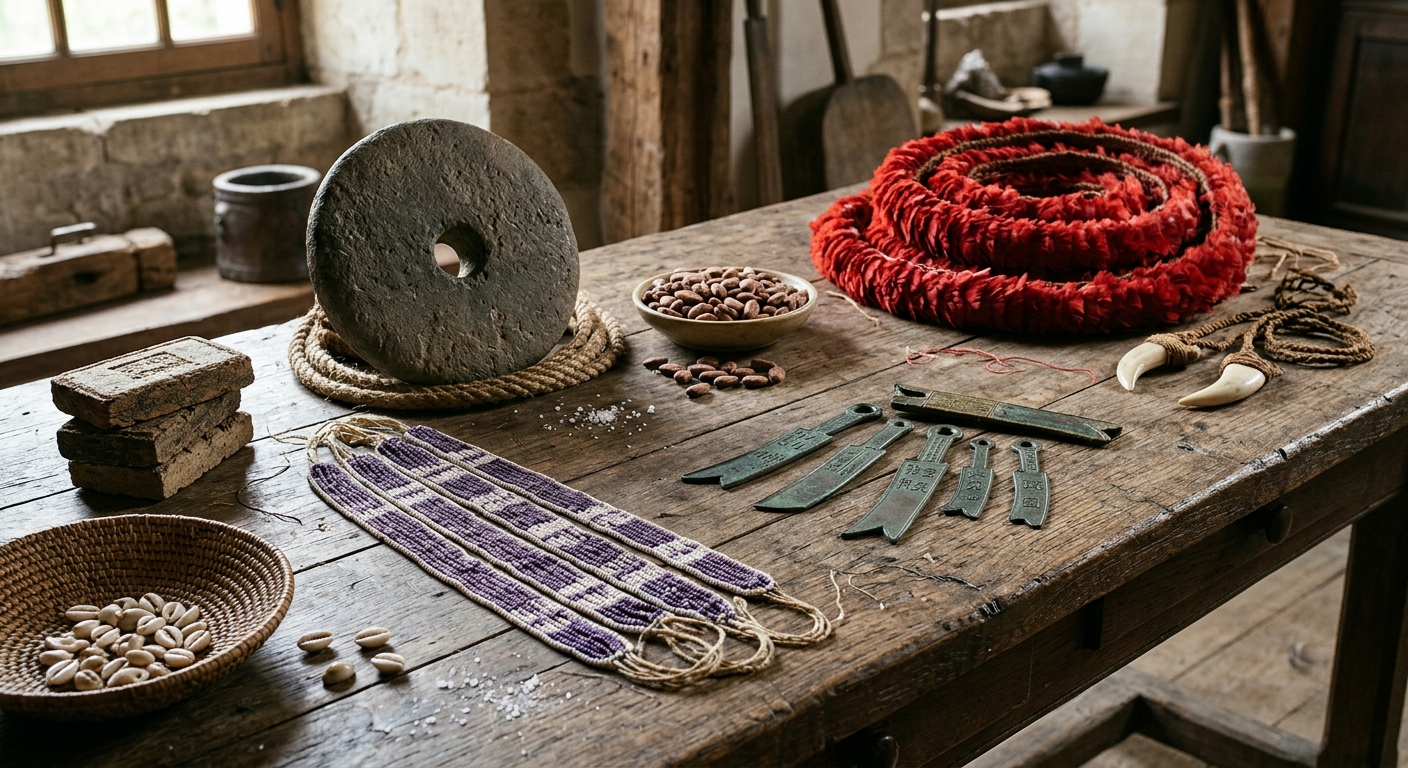
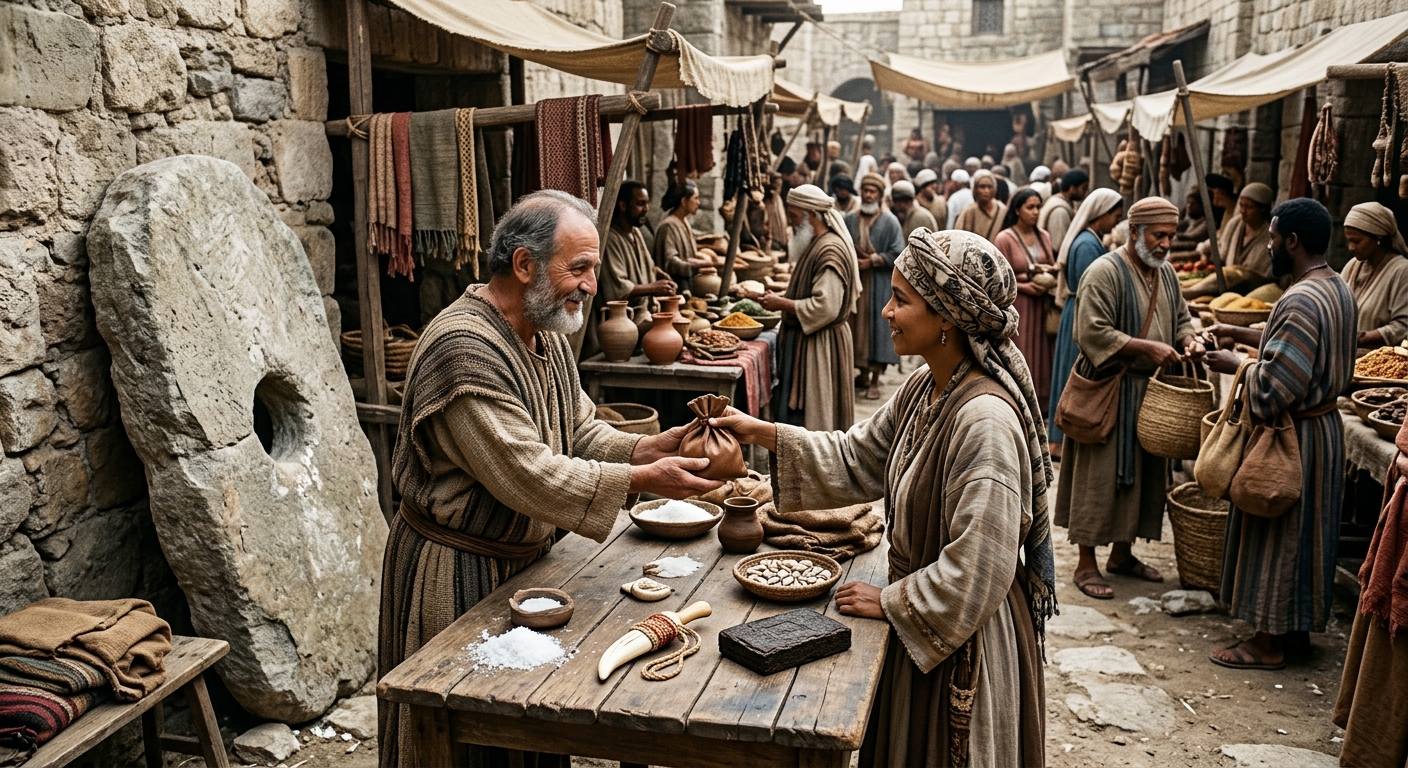
In our previous article, we explored the five bizarre currencies of Global History —salt, Rai stones, Cowrie shells, tea bricks, and Tabua. Today, we continue our exploration by discovering even more extraordinary forms of "money" that were used to buy goods, pay taxes, and conduct trade in various corners of the world. These were not mere objects: they represented real value for societies that turned to nature, craftsmanship, or everyday needs to construct their own monetary systems.
(Image Created by Gemini)
1. Cacao Beans: The Precious Currency of the Aztecs and the Maya
Long before cacao became the beloved ingredient in chocolate, it served as a powerful currency in Central America. Both the Maya and the Aztecs used cacao beans as an official medium of exchange—their value was so high that counterfeiters even crafted fake beans out of clay to deceive the system.
Cacao beans were used to pay for virtually everything: from food and physical goods to services and taxes owed to the rulers. Their significance extended beyond economics, holding a sacred place in religious rituals as a gift from the gods. When the Spanish conquistadors arrived, they quickly recognized the true value of these beans and began collecting them as taxes themselves.
2. Squirrel Pelts: Northern Europe’s "Leather" Currency
In medieval Russia and Finland, squirrel pelts were far more than material for clothing—they served as official currency. Whole pelts were used for larger transactions, while the animals' paws and snouts were cut off and circulated as "small change" for minor payments.
The connection to money runs so deep that the Finnish word for money—raha—originally meant "squirrel pelt." This form of currency was highly practical in heavily forested regions, where animals were abundant and pelts naturally retained their value over time.
3. Wampum: Shell Beads of North American Indigenous Peoples
Wampum beads were delicate, crafted from the inner layers of clam shells in shades of white and dark purple. For thousands of years, Native Americans used them not only as currency but also in sacred rituals, as symbols of solemn treaties, and as a means of recording history.
Upon arrival, European settlers quickly adopted the system, and by the 17th century, wampum had become legal tender across several American colonies. Its value depended on color and quality—darker beads were worth twice as much as white ones. Over time, mass production by Europeans led to severe devaluation, until wampum was eventually supplanted by modern currency.
4. Knife Money: When Copper Possessed Both Utility and Value
Between the 6th and 2nd centuries BC in ancient China, people didn't need wallets—they needed sheaths. The states of that era issued metallic objects shaped like functional knives, which served as currency. Each type had a specific size and weight, often bearing inscriptions indicating its denomination or the issuing region.
This system originated from the practice of trading tools and weapons. Over time, these knives grew smaller and more symbolic, until they were eventually replaced by the circular copper coins we know today. Nevertheless, they left an indelible mark on the economic history of East Asia.
5. Tevau: Feather Currency Reaching Up to 10 Meters
In the Santa Cruz Islands, part of the Solomon Islands archipelago, the most valuable currency was neither metal nor paper—it consisted of vibrant red bird feathers. Island inhabitants crafted long, dense rolls of feathers, known as tevau, which could exceed 10 meters in length.
These were not used for everyday transactions; instead, they were reserved for life’s most significant exchanges: marriages, political alliances, compensation, or ceremonial offerings. Crafting a single tevau required countless hours of labor, granting it immense value. A number of these feather coils are preserved today as vital cultural heritage, though they no longer circulate as currency.
Note(please read it): This is not financial advice and it is for educational purposes only. Any decision you make for your financial life is due to your own intelligence after your own research.
Related Articles
Four Times the Money Became Wortless.
From the First Central Banks to the Modern Banking System.
Five Peculiar Saving Accounts of Economic Crisis.
A Welcome to my History Blog: For the Lovers of ancient Greek Mythology and Minoan History please feel free to visit our second blog hosted on Blogger: syrinxandspear.blogspot.com
- If you enjoy this article you can help us by leaving a review, if you really enjoy our financial tips, you could head over to my Page and dive into the e-magazine Ants and Bees, where we explore the history and evolution of money through the centuries—though rest assured, it is strictly a historical and educational journey, not a financial advice magazine! 80 % down in any issue, just by using the coupon: 9V585JSQP7
Thank you very much. From Syrinx and Spear.